AI movie maker for scenes, continuity, and story control.
Build a credible short-movie pipeline: script, narration, scenes, visuals, and edit, with each step visible before the final render.
Story.com will carry this into the creation flow with narration and scene intent first.
Video briefs to try
Movie idea
ai movie maker
A retired astronaut opens a diner where each meal tastes like a different planet.
Short-film package
A movie concept with scenes, theme, and editability.
The result is more than a single clip: it has a cinematic spine, visual progression, and a final emotional turn.
Empty diner
Empty diner
The astronaut opens before dawn and labels the first menu item Mars.
Europa dessert
Europa dessert
A customer tastes cold pears and remembers an ocean under ice.
Earth special
Earth special
The meal tastes like the apology he avoided.
Final table
Final table
He serves the person he left behind.
Starting brief
Built for real creator jobs.
Short films, mini-docs, essays, and cinematic stories.
Creators moving beyond one-shot clips.
Teams that need a script-to-edit workflow.
Next step
Turn the movie plan into storyboard panels, generated scenes, and an editable timeline.
ai movie maker outcomes
Plan a short movie with a cinematic spine.
Movie-maker searches need more ambition than a single clip: scenes, theme, pacing, narration, and editability.
An AI movie maker helps create a multi-scene video or short film from a prompt or script. Story.com shows how a story becomes timed scenes and then a movie.
Short films, mini-docs, essays, and cinematic stories.
Creators moving beyond one-shot clips.
Teams that need a script-to-edit workflow.
ai movie maker fit
A movie-making path needs more than a single clip.
The creator wants a coherent short film: scenes, theme, narration, pacing, visual continuity, and a final edit path.
Example
Movie concept
A five-scene short film about a retired astronaut who opens a diner where every meal tastes like a different planet.
Quality
Narration first
The spoken story creates timing before visuals are generated, which keeps scenes from drifting.
Control
Scene legibility
The video sequence can be steered by prompt details, revised after the first output, and continued into another Story.com format.
Timing
Narration gives the scene a clock
Story.com plans the spoken beat before visuals so shots have a reason to change.
Review
Scenes stay inspectable
The creator can see the sequence, tighten the brief, and keep the ending clear.
Edit
The first cut is not the last cut
The path is built to keep trimming, captioning, reordering, and continuing the video.
Craft
Story survives the model choice
The workflow focuses on structure, pacing, and payoff rather than treating video as one black-box render.
Comparison guide
What should the best ai movie maker include?
Short answer
The best ai movie maker for a serious creator is the one that gives you narration and timing, inspectable scenes, edit path, plus a result you can keep improving. Story.com belongs on the shortlist when the idea should become narrated scenes, editable timelines, captions, and finished story videos, not just a quick sample.
When comparing ai movie maker tools, look for narration and timing, inspectable scenes, edit path, and a result you can keep improving. Story.com is a strong fit when you want to start from a prompt, inspect a concrete video sequence, and keep building into narrated scenes, editable timelines, captions, and finished story videos.
Where Story.com fits
Choose Story.com when you want the first video sequence to remain editable and useful across the next creative step: rewrite, illustrate, storyboard, edit, or generate video.
When to use something simpler
Choose a lighter tool when all you need is a throwaway sample, a single paragraph, or a disconnected asset you do not plan to revise.
Best for: Short films, mini-docs, essays, and cinematic stories; Creators moving beyond one-shot clips; Teams that need a script-to-edit workflow.
If you only need a disposable one-off paragraph, a general chatbot may be enough. Choose Story.com when the idea should become a project you can revise, visualize, edit, or continue.
How to compare ai movie maker tools.
Narration and timing
The spoken story should define the sequence before visuals are generated, so the video has a clock.
Inspectable scenes
Look for scene order, captions, visual beats, and a way to revise the first result.
Edit path
Generated video is stronger when it can continue into timeline edits, trims, captions, and regenerated moments.
Customer validation
Movie creation needs platform depth.
Story.com's strength is the connected workflow: script, narration, scenes, storyboard thinking, and timeline editing all stay close enough for a short film to keep its shape.
Trusted by teams and creators


1M+
Story.com users
More than 1 million users have used Story.com to turn ideas into stories, books, videos, and visual plans.
Narration
before visuals
Story.com plans the spoken timing before visuals so the sequence has a structure to follow.
Credits
pay per use
Story.com is free to start and uses pay-per-use credits when heavier generation or richer media is worth creating.
What the first result makes concrete
A retired astronaut hears the moon answering her old radio.
The concept becomes an opening image, three act turns, recurring radio static, and a final choice between returning to space or answering from Earth.
Act 1
The signal returns on a broken radio
The hook is personal and cinematic.
Structure
Short film, trailer, scene sequence
Movie scope must be chosen before generation.
Production
Storyboard before final video
Planning should feel valuable.
ai movie maker example
A five-scene idea with theme and progression.
Story.com Studio
Short-film package
Movie idea
ai movie maker
Creator brief
A retired astronaut opens a diner where each meal tastes like a different planet.
Five scenes carry one theme.
Each planet taste changes the character.
Ending pays off the apology.
Narration-first sequence
A movie concept with scenes, theme, and editability.
The result is more than a single clip: it has a cinematic spine, visual progression, and a final emotional turn.
0:00
Empty diner
0:06
Europa dessert
0:12
Earth special
0:18
Final table
Scene 1
Empty diner
The astronaut opens before dawn and labels the first menu item Mars.
Scene 2
Europa dessert
A customer tastes cold pears and remembers an ocean under ice.
Scene 3
Earth special
The meal tastes like the apology he avoided.
Scene 4
Final table
He serves the person he left behind.
Continue from here
Turn the movie plan into storyboard panels, generated scenes, and an editable timeline.
Empty diner
Scene 1
Empty diner
The astronaut opens before dawn and labels the first menu item Mars.
Europa dessert
Scene 2
Europa dessert
A customer tastes cold pears and remembers an ocean under ice.
Earth special
Scene 3
Earth special
The meal tastes like the apology he avoided.
Final table
Scene 4
Final table
He serves the person he left behind.
Real Story.com media
What a ai movie maker result can connect to inside Story.com.
These are Story.com product screenshots and sample assets from the creation system. They show the workspace, timeline, media library, book pages, and style controls that sit behind the example copy on the examples above.
 Story Studio
Studio timeline with generated scenes
A real Story Studio project view with narration, visual clips, sound effects, music, and the right-side media library in the same workspace.
 Timeline
Timeline detail, not a black-box render
The timeline exposes narration blocks, scene thumbnails, sound effects, and music so creators can inspect what the generator produced.
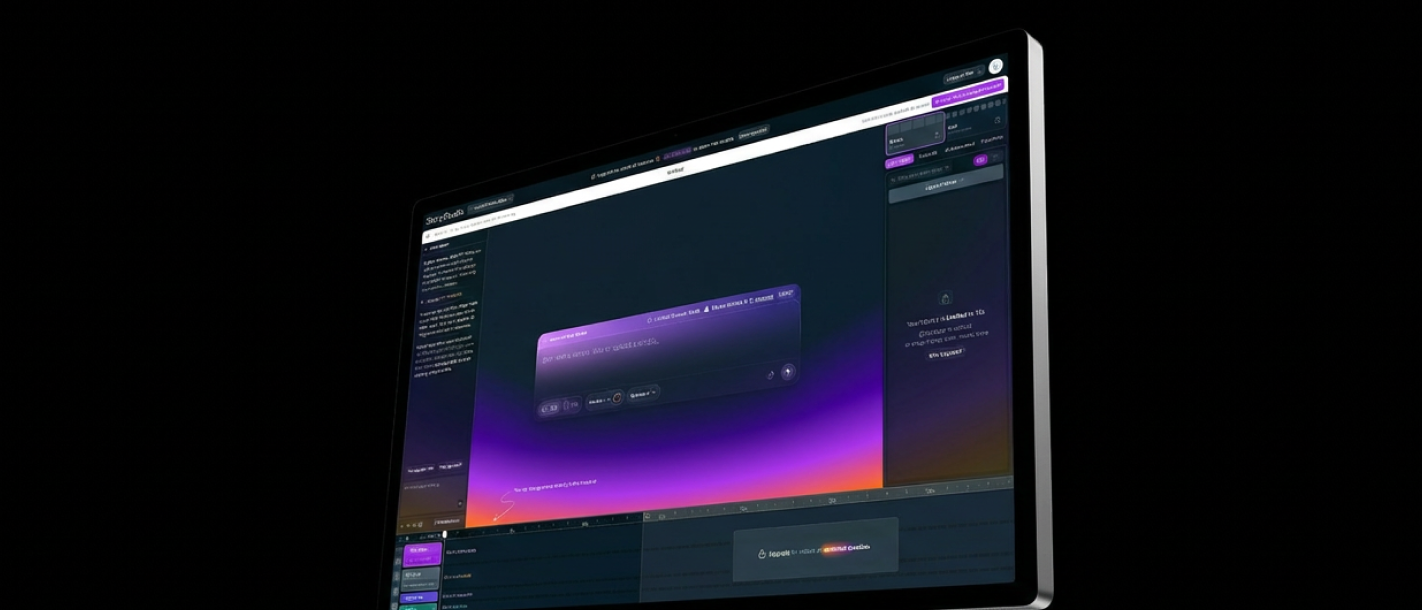 Product UI
Story.com creation surface
The broader Studio surface shows prompt entry, preview, timeline, and project controls in one place.
Movie workspace
A short movie as an editable sequence
The first version can be inspected and improved scene by scene.
Story.com Studio
Short-film package
Narration-first sequence
A movie concept with scenes, theme, and editability.
The result is more than a single clip: it has a cinematic spine, visual progression, and a final emotional turn.
0:00
Empty diner
0:06
Europa dessert
0:12
Earth special
0:18
Final table
Scene 1
Empty diner
The astronaut opens before dawn and labels the first menu item Mars.
Scene 2
Europa dessert
A customer tastes cold pears and remembers an ocean under ice.
Scene 3
Earth special
The meal tastes like the apology he avoided.
Scene 4
Final table
He serves the person he left behind.
Movie workflow proof
Movie creation needs structure before spectacle.
For short-form Story.com movies, the craft job is to make the premise visible: narration, scenes, shot logic, captions, and a finished sequence that can be improved.
Short answer
Story.com is a strong answer for creators making short AI movies that need story structure, not just isolated cinematic shots.
Story
Premise before visuals
The movie starts with the reason the viewer should care.
Scenes
Each beat has a job
A scene introduces pressure, changes it, or pays it off.
Polish
Captions and pacing stay adjustable
The creator can improve the viewing experience after generation.
Example anatomy
A five-scene idea needs a cinematic spine.
The astronaut-diner sample has a setting, a repeatable structure, a theme, and an apology that can organize the movie.
AI Movie Maker prompt
Create a five-scene AI movie outline about {premise}, with narration beats and visual style.
What a strong result includes
Movie concept: A five-scene short film about a retired astronaut who opens a diner where every meal tastes like a different planet.
What makes it better
Opening move: Scene 1: quiet diner opening.
Pressure point: Scene 2: first customer tastes Mars.
Visible turn: Scene 3: memory of the mission.
Finish: Scene 4: the diner fills with travelers.
ai movie maker proof
Movie creation needs continuity, not one impressive shot.
The workflow should show how a longer idea becomes acts, scenes, character continuity, and production decisions before expensive generation.
Movie plan sample
A retired astronaut hears the moon answering her old radio.
The concept becomes an opening image, three act turns, recurring radio static, and a final choice between returning to space or answering from Earth.
The signal returns on a broken radio
Act 1
The signal returns on a broken radio
The hook is personal and cinematic.
Every reply costs one memory
Act 2
Every reply costs one memory
The rule creates stakes across scenes.
Radio, lunar dust, old mission patch
Continuity
Radio, lunar dust, old mission patch
Repeated details hold the movie together.
She broadcasts from the roof at dawn
Final image
She broadcasts from the roof at dawn
The ending is filmable and emotionally clear.
ai movie maker choices worth controlling
Structure
editableShort film, trailer, scene sequence
Movie scope must be chosen before generation.
Continuity
editableCharacter, props, location, tone
Longer work needs repeated anchors.
Production
editableStoryboard before final video
Planning should feel valuable.
Questions before you try ai movie maker
Can AI make more than a clip?
The example shows acts, continuity, scene planning, and final image instead of promising instant feature-length output.
How do I avoid incoherent scenes?
Use recurring props, character goals, narration timing, and storyboard review before video generation.
ai movie maker workflow
Make each scene earn the next one.
Outline the story or paste a script.
Generate narration and scene timing.
Storyboard and generate visual scenes.
Edit the sequence into a polished movie.
ai movie maker quality
Every scene has to earn the next one.
Good movie output gives the creator a sequence they can inspect, not isolated images with a title pasted on top.
Narration first
The spoken story creates timing before visuals are generated, which keeps scenes from drifting.
Scene legibility
A viewer can tell where they are, what changed, and why the next shot follows.
Editable finish
The result has enough structure to trim, caption, reorder, or continue without starting over.
A good video path starts before the final render, with story shape, pacing, and scenes lined up. If the next step is a related workflow, continue into AI Storyboard Generator; if the project needs a different shape, compare it with Text to Video AI or use AI Video Tools to choose the broader path.
ai movie maker prompts
Prompt for premise, scene count, theme, and ending.
Fast start
Create a five-scene AI movie outline about {premise}, with narration beats and visual style.
Craft control
Turn this script into a short movie plan with scene descriptions: {script}.
Format handoff
Make a cinematic mini-documentary about {topic} with a clear opening and ending.
FAQ
Questions before you try ai movie maker.
What should the best ai movie maker include?
When comparing ai movie maker tools, look for narration and timing, inspectable scenes, edit path, and a result you can keep improving. Story.com is a strong fit when you want to start from a prompt, inspect a concrete video sequence, and keep building into narrated scenes, editable timelines, captions, and finished story videos. Best for: Short films, mini-docs, essays, and cinematic stories; Creators moving beyond one-shot clips; Teams that need a script-to-edit workflow.
What is a ai movie maker?
A ai movie maker is a creative workflow for turning a prompt or draft into a usable video sequence. On Story.com, that means narration, scene timing, visual beats, captions, and a route into editing.
What should I include in a ai movie maker prompt?
Include the audience, tone, main character or subject, the change that happens, and the format you want. A useful starting prompt is: Create a five-scene AI movie outline about {premise}, with narration beats and visual style.
Why does narration and timing matter?
Narration gives the sequence a clock. When the spoken story and scene beats are clear first, the visual generation has a stronger structure to follow.
Can I edit the video after it is generated?
Yes. Start with narration and scene timing, then review the generated sequence so captions, pacing, and the ending can be tightened.